Omarchy StoriesVideo
Building Omarchy Plugins with AI
Omarchy Stories 003 · 16 september 2026 · 1:02:27
“Eventually you will be able to request this subsidy yourself with AI and then you pay us a fixed fee.”
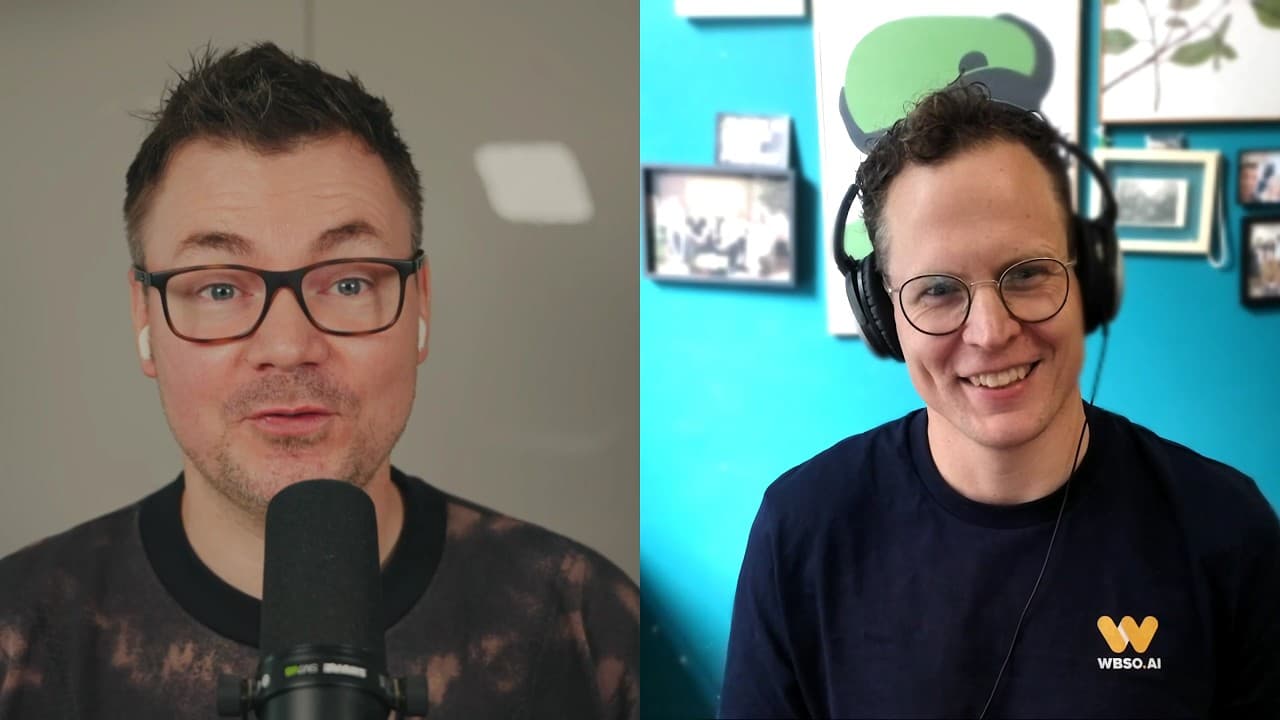
Omarchy is een Linux-omgeving voor developers, gemaakt door David Heinemeier Hansson, de maker van Ruby on Rails. In Omarchy Stories spreekt host Basti met mensen uit de community. In aflevering 3 was Jankees te gast, als maker van zeventien Omarchy-plugins.
Het gesprek is in het Engels en gaat vooral over bouwen: van systeembeheer naar software, hoe je AI verantwoord inzet, waarom smaak en fundamentele kennis belangrijk blijven, en Omarchy Kids, waarmee kinderen leren programmeren.
Rond minuut 42 komt WBSO.ai langs. Jankees legt een internationaal publiek uit wat de WBSO is: een Nederlandse regeling die de ontwikkeling van nieuwe technologie stimuleert, voor hardware en software. ASML is een van de grootste gebruikers, maar ook kleinere bedrijven die nieuwe hardware of software ontwikkelen kunnen er gebruik van maken. Traditioneel neemt een adviseur een flink deel van het voordeel. WBSO.ai maakt er een product van, tegen een vaste prijs.
Zelf de WBSO-uren van jouw ontwikkelaars bijhouden? Bekijk WBSO-administratie voor developers.
Volledig transcript(Engels)
Basti: So welcome to a new episode of Omarchy Stories. Today I'm joined by Jankees and you maybe know him from the plugins. I think you have right now seventeen plugins on the store. Or maybe eighteen today? I know, I'm not sure.
Jankees: That's right. Seventeen. No, it's no seventeen. It's it's seventeen.
Basti: And he joined Omarchy Kids. So welcome to the show. Please introduce yourself.
Jankees: Thank you. Yeah, I'm Jankees. I'm a developer from the Netherlands. that's what I used to call me, but now I'm more vibe coding and making all kinds of stuff.
Basti: Or maybe agentic engineering. So
Jankees: Agentic engineering, yeah.
Basti: I don't like wipe coding because wipe coding is something like script kitties or the early 2000s. So you don't know what you do and you just use some scripts. Just fire them on or off. And yeah, I think you know what you do, but you just use AI to get some wings on that.
Jankees: I used to call mys myself software engineer, but I think that time has passed.
Basti: Well I have no idea how to call that, so you have a proper education in software engineering?
Jankees: Yes.
Basti: So what have you done?
Jankees: so I went to school. At first I s I my career, as you could say, started in sixty-nine. I was making websites for the the local punk bands here in the neighborhood. I was making guessbooks. So I thought I wanted to do something with computers. So what I first did, I was going to a school for system administration. So you do like set up an enterprise network and that kind of stuff, but then later I discovered that the only thing I needed to do in that education was fix printers. And that's that's something I I could do, but I wasn't going to do it for the rest of my life. And I learned that
Basti: Course not.
Jankees: making scripts to do like backups and these kind of things, that was interesting to me. And that's also the first time I touched Linux, so that's really a long time ago. that was through in in the early 2000s. And then I thought, okay, this this programming that's that's interesting. So I switched to another school. It was like a multimedia school, and that's that's where I get got my degree. and that's that's how I got started.
Basti: So and since then you told me you're self employed, right? All the time.
Jankees: Yes, I've been self employed, yeah, since two thousand seven. Yeah. Almost twenty years.
Basti: Really nice, yeah. So yeah, it's a long time. So when when I think it back when I was starting, I mean there are people out there that are much older than we, but yeah, twenty six years ago. It's crazy. How
Jankees: Yeah. Yeah.
Basti: the time flies. So and then you switched somehow to Omarchy. So when was your first contact with Omarchy?
Jankees: Yeah, so I always been a Rails developer. I I I started using Rails in 2006, which is I think one year after it came out at school. so I already knew Basecamp and 37 Signals, I read their books, I followed them. so when Omakub was released, I tried it, but it didn't really click for me. It was not not that big of a difference if you compare it to like macOS. The thing I was using back then. So I tried it on a spare ThinkPad laptop that I had laying around, but I didn't fully get into it. But then I think half a year later, Omarchy came out. And that was also the same time when I went on a vacation. It was time to say at the same time. So I thought, okay, David is going full full throttle on this. I think he's going to. Put all his effort in it and I want to try it. So what I did I on this vacation, I only brought the ThinkPad with Omarchy. So it was the only thing that I had lying around. So in that in that two weeks, the only thing I touched was Omarchy. And from that moment I was all in and I haven't used macOS since.
Basti: I've not the same kind of story with the with the long background with Rails and searches and signals, all that stuff. So I switched to Rails last year.
Jankees: really?
Basti: when I was looking, okay, well let's go back to some kind of of web application development. And I was giving LowerWorld and PHP a try again, because I knew PHP, but I then thought, well, I don't like PHP. Well So I don't need it for work or for j for a job, so I say, well, what do I like? What do want to do? And I just looked around, I found Ruby on Rails, by accident. And since then I'm really interested in Ruby on itself. And so this is a whole story for me. And then I saw somehow David posting about Omarchy. and I started using Omarchy twenty twenty five. I think in the beginning. something in the spring, I'm not sure. And since then I'm st I'm with Omarji totally. Yeah. I really enjoy it. and I've never d d well I developed one plugin but I didn't put it on the plugin store. I used it for my Elgato key lights you can see here in my mirror behind me and because I want to control them and it was so fun because I w I could use an already plugin in the store. But just talk to my agent, well, I want to have my own plugin, do it, just give it try. And I think this was wipe coding. I really said, Well, I want to have this plugin working, I want to have the color temperature, I want to control both at the same time, and do it for me. And it just did it. It was for me perfectly working. I can switch my light with with my with some short keys here, and it's just so easy. Of course, and it's this is not really a sophisticated. high quality software but for doing your own task, your own jobs. I think it's so easy to switch to Linux right now or start configuring your own system with the agents. What was your first impression when you developed your first plugin?
Jankees: so I used Omarchy for a year, but when Quattro came out, something clicked for me, and I it it is because of the the the new plugin system and the the whole what's it what's it called again, the quick
Basti: Quick share.
Jankees: quickshell. That that totally made it a different game because and and also the models got really good, so it's it's it's quite easy to make something. So when Quattro came out, I I had a couple of ideas to make something for myself. I I'm always interested in productivity. I've always been interested in that, and I've always been making apps for that. I also like 10 years ago I was making apps for the Mac to do productivity things. so when Quattro came came out and I noticed that there is a plugin ecosystem and there is a marketplace and it's you can use your AI model to create them. I just had a couple of ideas, small things that laying around, and I just asked my agent to help me with them and then I found out how how easy it is to make a plugin. As you say, it's it it doesn't have to be sophisticated. So the first one was a a plug-in in my menu bar which I could use to to switch on my lights in my office. I have like a home assistant thing. And that was l just like one prompt and I had like a a toggle in my menu bar. And then and then I got addicted. So I made another one and another one and another one. And I think after the fifth or sixth one I started to publish them every day on X. And that's that's the reason probably why people follow me now right now, because I made so much plugins.
Basti: Yeah, this was how how I found you on X. because of your plugins. You were talking about the plugins.
Jankees: Mm-hmm.
Basti: yeah, this is really a lot of plugins, so seventeen. did you ever look at the code? So when I I would say wipe coded my only plugin, I haven't looked at the code once.
Jankees: to be honest, I don't really look at the code, but I test them thoroughly on the VM. And I ask multiple models to look at the the code and and talk to each other to find security problems.
Basti: Yeah, of course.
Jankees: and that's also something people complain about on X. If they look up my plugins they they find find like a bug or a security thing and they they say it's vibe coded and it's trash and you shouldn't use it. But I I have the the the plugins are also like touching a really small part of your system. It's they are interacting with a CLI you're already owning. so I don't write the whole CLI to to connect to your Google calendar for instance. I have a Google Calendar plugin. I didn't write the CLI, I just using a CLI that's already built and I just talk to it. So that's it's not much that could go wrong with it. So but no, I d I to to answer your question, I don't look at the code that often.
Basti: Yeah, so this makes me thinking right now maybe I just look at my only plugin code just for fun, just to see okay how what did really do. So I had never really never the need to s to see what's inside this code because it's just working for me. I have on my GitHub, of course you can look at it if you want, but I don't put on the on the plugin store there. So right now I'm thinking about What plugin do I wanna really want to do? Because I'm really interested in maybe doing one plugin that's a little bit more productivity for me.
Jankees: Mm-hmm.
Basti: I have so many ideas, but I'm not really sure what I want to do. I have so much other stuff to do, so I could just fire off my agents, but I plugin, I really want to do it let's say with a plan and not just by coding for me. Yeah.
Jankees: Mm-hmm.
Basti: So but on the other hand, there's a lot of stuff going on. It's a security team, so all my free time mostly going to that there.
Jankees: Can't you make something like a plugin for the security team?
Basti: Yeah, it but it wasn't will not be a plugin. So we doing
Jankees: For for for me, the all most of my ideas come from from like a spark that I'm doing something like repetitively. And
Basti: Yeah.
Jankees: then I think, wouldn't it be easy too? And then then then the plugin ex starts to exist.
Basti: Of course, but I think for the internal work definitely not as a public plug in. So we have a lot of stuff going on there on our own stuff with agents doing doing stuff, review stuff, the preparing stuff. Of course it's always human who is overwatching the stuff before it gets merged. but with the agents, I mean they are really fast, they can do so much stuff and the quality is good. So for For the first, let's say, oversight, testing stuff, giving your feedback, talking to other agents, and then you have to make a decision. You can look at the code, what's will be changed, what patch happening there. for the help, it's it's really good, yeah. But it's not for a plugin. So I'm thinking about a plugin, let's say I really like Tor as a Tor network. And I've never looked at the plugin store because I'm not using plugins right now. I have no idea why. But I have only my own plugin that I made for my key lights. But I'm really interested in some kind of Tor plugin. Maybe there's some, they then I don't need to do it. But so the stall store stuff I think is it's good for the people who really need that stuff. So I don't need Tor for no reason, but I like the concept behind Tor. Yeah. Do we know something about the maybe a Tor plugin out there?
Jankees: No, no, I also don't really look at the store actively. I I look at the the top plugins of course to see what what's out there, but I I don't browse a plug in. If I
Basti: Yeah.
Jankees: have an idea I start working on it and then when I'm done I look if if there is like competition to say, but
Basti: Ha ha ha.
Jankees: it doesn't prevent me from writing my own because I I want to scratch my own edge and I want to do it in the way I want to fix it. So I don't
Basti: Yeah, of course.
Jankees: yeah. I I'm I'm also building a skill over time. So when I started on my first plugin, I immediately started making a skill to make plugins.
Basti: Yeah.
Jankees: And there is a step in there that first when I pitch my idea to the skill, it goes to look to the marketplace and it lists the the things that look like it, but I d I don't think I actually looked at the pages. I just look at there are a couple of things that do this, but let's go.
Basti: so when we're talking about agents, your education, all the stuff, what do you think about software engineering right now? When someone wants to enter into software engineering, let's let's call it software engineering for now. I have
Jankees: Mm-hmm.
Basti: no idea what's what's the new name would be for that, but I'm talking lately, I would say last three, four months with people about that stuff. what would you say if someone wants to join software engineering? Let's say it's a starting point maybe in a new university or at the education in Europe. is it a good decision? Of course we cannot say it right now, but what would you say where to focus on?
Jankees: I think it's still a good idea to do something with computers and maybe to have like a professional career in it. it's a really interesting topic. I talk a lot a lot about this with my friends. There are a lot of different ways to look at it. I I have a couple of AI Doomer friends around me who say everything is going to to shit and we are all without jobs in in a year. But I'm having so much fun in this. AI era that I didn't I don't want to miss this. I I don't want to miss the opportunity to make so much cool stuff. Before when I was a Rails programmer, I solved everything with Ruby and Rails. But right
Basti: Yeah.
Jankees: now I can just say okay for this time I I'm going to use Go or I'm going to use this or that or QuickShell or whatever. And it's I've always liked that I that I could solve a problem for somebody with with code. but before I only could use Ruby on Rails. Right now I can use everything to solve a problem. So I could now I can solve much more problems than I could solve before.
Basti: would say I'm not an AI doomer, definitely not. I love AI, what you can do with that, and I'm really happy to be here in this time right now. I mean something like the early 2000s, when everyone was doing stuff for the internet, for the websites, the first ones. But I think you have to be use AI responsible. so you I would not say you need some kind of overwatch. But in the end, if you're not really using it, let's say really carefully. Let's say it's it's the stuff with the with the atomic energy. I mean it's crazy. So the first thing that it did was was the bomb. So the atomic bomb, right? So new technology, well we use it nice for that. I really love AI, but I have no really idea or conclusion how we can really fit it into our life in the next five, ten, twenty years. I have no idea. because it's so going so fast. And if you're looking at Elon, what he's doing with his robots, with his stuff there, it's so nice, but I think you must be thinking human first. What's your take on that?
Jankees: Yeah, yeah, that's that's If you look at the long term things that come up with AI, then then it's really hard for me to to say what's I I just want to focus on today and what makes me happy. And what makes me
Basti: Of course. Yeah.
Jankees: happy is solving problems. and if I look at the future I can see all kinds of problems coming at us and and I think probably probably programming will be out of our lives. We don't see code anymore because AI is already better at coding than I was. ever at Rails, even after 20 years of doing Rails. so there's no use for me to write code. It can still be fun. You can like have like a hobby hobby club that without internet
Basti: Yeah, like playing chess.
Jankees: yeah like playing chess. That's that's something that you do for a for a fun evening together. but I think professionally it's there's no use to write real code anymore.
Basti: I mean it would be weird if you're writing assembler code just for fun in the evening. So it's really strange. But yeah, you're totally right. I think at some of
Jankees: Yeah, I think there are people that are doing that. Why not?
Basti: course, yeah, of course, yeah. But I think
Jankees: Yeah.
Basti: in s at some point it will be exactly like that. It would say, well, we don't have even to look at this stuff of some some kind of code. And or we even don't need to tell the agent what we want to have. We say, Well, this is a problem, my lights are not working, figure it out. So for my example here.
Jankees: I I think we're all already almost there. It's it's
Basti: Yeah.
Jankees: we yeah. If I'm I'm also running a company where we have like a Rails application and I don't actually have to look at the code. I look at the the bigger important things like the the the Rails models and the migrations if if because I know those are are things that are harder to revert, but I I never look at the views like what the code is or I'm using Tailwind and the EOB, but I don't look at look don't look at the views. I test it in the browser. I have like feature tests and and all all that kind of stuff, but I don't look at the code that the AI generates for it. So I think
Basti: Interesting.
Jankees: yeah, that's that's that's the way we're going.
Basti: Yes, it's really interesting. But I think still the fundamentals, so for example right now and things the next maybe two years are really important to understand for software engineering. So you don't need to be an expert on writing code, but I think you should be an expert if you want to really good and professional software and get maybe money from that. you should be an expert on software engineering to understand the whole process that you can really overwatch your LRM, your your
Jankees: Yeah, yeah, yeah, yeah.
Basti: agent, if it's doing the right thing, If it's secure, I mean if you be professional with that stuff, not if you're doing for a hobby for yourself. I mean you should, but it's not that important, I think, for someone who's doing that on their own for fun. so I think right now when I talk to people about that, I would say, well definitely do it. I think it's totally fine, but I have no idea how long it will be a let's say a good job, good payment, good positions. I have no idea. But right now I really love that stuff because Understand the basics. I would say understand one programming language that you can really use for that. go into every s circle of software engineering and then on top of that use LMs or use agents and AI. But don't learn software engineering with AI, do it without AI. If you can do that, you're totally fine to use agents on top of that, I would say. So for a
Jankees: Mm-hmm.
Basti: profession.
Jankees: I think taste is still something that is quite important. Taste is a thing that we as humans set set humans apart and also is a difference between AI and and humans. If you, for instance, now ask an AI to make an application, it it has a certain AI feeling to it. It lays it has like a I I yeah, you can see that Claude generated the website, I think. But if you do enough steering and give it examples what you want it to have and then then you can make it a little bit different or stand out more. So that's that's still important
Basti: if you l
Jankees: I think.
Basti: if you look at Omarchy Story's website, I just I was talking to the age and say, Well, I want to have an website. It looks like a pirate radio station told the LLM do something really crazy for me that I maybe
Jankees: Mm-hmm.
Basti: like and just produce a website or much of stories. So I didn't do any hand coded stuff on there because I don't need it. It's just for the for the podcast, it's nothing special and Alex looks like the look and feel. And if you're on the on the website with a computer and you have a small slider, you have some noise. So you you you lose the signal. So if you using the slider, you're losing the signal, it's getting a little bit more noise
Jankees: The old school radio,
Basti: yeah, yeah, yeah, more noise than that. It's not working on the phone, for example on an iPhone because it's some problem with the iOS development kit stuff. I don't care. I said, well, we try to figure it out. It's not working, it's totally fine. I don't need it on on the iPhone. but this was really two sentence for the LLM, for the agent. It's fine. So for that purpose.
Jankees: What you what you could do if if you do are doing that, like add something like make five websites and then let it go and then you can pick the
Basti: Yeah. Yeah.
Jankees: best one or maybe combine them. If you ask
Basti: Yeah.
Jankees: that then some sometimes Cloud starts generating like a what's it called, an artifact. Have you seen that? And then it makes a hosted website on Cloud dot a IO or something and then then you get like a interactive interface where you can select things.
Basti: Mm, I saw it once.
Jankees: Yeah.
Basti: Yeah.
Jankees: That's also what I sometimes do with my plugins. Like make make three UI interfaces and then I pick the best one.
Basti: This is fun, yeah, that's cool. So I saw you already in the Omarchy Kids deep, right? So I've
Jankees: Yes, yes.
Basti: never looked into Omarchy Kids. Explain us please what's going on there. What's for what is that?
Jankees: Yeah, so that's a new project that I I joined. And what we want to do is we make want to make a special Omarchy version. So you buy a like a cheap XPS laptop, which I also bought a 13 inch for your kit.
Basti: It's not cheap.
Jankees: It's yeah, okay, it's not super cheap, but it's not as exp expensive as a framework.
Basti: Of course.
Jankees: and you give it to your kit and you set it up as a kit device. So in the Omarchy installer, you can say You can already say it's for me or it's for somebody else. But you get a new option, it's for my kid. And that gives a a different interface. You get like a screen time thing and you get different wallpapers, and it's more kit focused instead of developer focused. Yeah.
Basti: This is really nice. Do do you know when we will chip that?
Jankees: I hope soon. I'm working on the
Basti: In the next release?
Jankees: I don't know. There is not I don't think there is anything merged yet to core, but we have like the the installer selection is ready, screen time is ready, we have a couple of themes, and then I think from that point we have to see what what's the next feature. we have an idea to use like a DNS thing so you can block certain websites. Yeah, so there are a couple of ideas to how to continue with this, but yeah, I hope to ship this as soon as possible. Because I'm I'm also like a part-time teacher at the school of my kids. I do that one hour a week. I give them like a programming course for for really small kids, like ten ten ten and up.
Basti: So what what are you using for that? What kind maybe of programming language?
Jankees: Yeah, it's it's really interesting. I I I I'm having more fun with that than I expected before because yeah, I can tell you. so we do a couple of things. We do like Arduino stuff, you maybe know that like with breadboard and then with LEDs.
Basti: I know, yeah.
Jankees: Yeah, that's that's a course I get from school, so I can just give them the course. But then I thought I could also like bring my computer and Claude Code and Try to make something with them, like make a game.
Basti: Yeah.
Jankees: And they had so much fun with this. And so every week I go there for one hour, and I had like different groups, and in one hour we were trying to build a game. So I I at home I prepared it a little bit, so I make like a HTML canvas and a Claude Code on the left. And if I gave a prompt, then it would out auto-reload the HTML page. There was nothing on the HTML page, just a red circle. So the the only thing I showed them was make the red circle green. I pressed enter, it generated the code and it turned in the right color. And then they I I just let them use my computer just after each other, so we switched around. And it was just amazing to see what they came up with. And like every group that I did this with, it's it's they had so much fun and they talked to everyone about it. It was like the highlight of their year to make a
Basti: This is cool.
Jankees: make a game. And in the end I made like a gallery of all the games they made. So they and right now if they have like free time at school they play all these games they they made them themselves.
Basti: this is a good idea man. Really good. give me a second. I have to go to the So sorry I'm back.
Jankees: No worries.
Basti: I just got my Omarchy hoodie. Yeah.
Jankees: really? Look what I got yesterday. no, this is
Basti: It's a t shirt.
Jankees: where is it? it's upstairs. Sorry, it's a wrong t shirt. I got a t shirt,
Basti: Yeah.
Jankees: yeah.
Basti: Yeah, same for me. So I ordered the t shirt and the hoodie. And the t shirt I think came from Europe and the hoodie from the States.
Jankees: really?
Basti: Took a little bit longer. So where we left off. how much kids?
Jankees: We were talk yeah, we are talking about kids and AI.
Basti: Yeah. So we just had to make a small break because DHL ring on my door. So we're starting again here. and what are you doing directly at Omarchy Kids we're working on right now?
Jankees: so I'm I'm working on the screen time plugin. because there was Harris Canny is the the one that's leading this project. And he there was like a list in Discord of things that you could work on, and I volunteered for the screen time plugin. And the thing that makes screen time interesting to me is that We are I am a dad who doesn't like to punish their kids. There there is like a kind of education style where people punish their kids to if they do something wrong and give them rewards.
Basti: Of course, yeah. Yeah.
Jankees: But I am more in the in the camp of like have an agreement on something and then like treat them like like adults.
Basti: Yeah, same here.
Jankees: Yeah, so that's that's some some fun thing that I wanted to include in this plugin. So my plugin has two modes. There is like a regular screen time mode where you Yeah, it's I don't I didn't call it punishment because
Basti: Punishment mode.
Jankees: I don't want to make it that heavy. But it's it's
Basti: Of course.
Jankees: it's like a strict mode and a more loose mode, agreement mode. And
Basti: Yeah.
Jankees: you can as a parent you can choose which one you want. And in the strict mode, there is like a screen limit, and when you hit the limit, the computer goes to lock, and in the agreement mode the kid can see how much time he has left. And if you go over it, you just go over it. And there is like a little journal feature in that plugin where you can write what you're doing and why you want to go over time if you're in the agreement mode so you can talk about it later.
Basti: That's interesting. Or maybe some feature like you have a weekly time limit. And if you're going over your daily time limit, let's say, you're using some time from the rest of the week. So the kids
Jankees: Yeah that
Basti: can say, Well, I have let's say I have twenty hours a a week, I I don't know. And if I'm using, let's say, five hours a day normally, and then I'm using six, okay, I'm losing this hour somewhere else. Yeah, maybe interesting.
Jankees: Yeah. Yeah, that that's something I think I could do go in the in the strict mode. I
Basti: Yeah.
Jankees: think the loose mode is just when I was young, I was like having a Commodore 64 and my parents didn't give me any screen time. It was just have fun with the computer and
Basti: Same for me.
Jankees: yeah that that led me to to the career I'm having right now. So it would be for me kind of stupid to prevent my kids to like of course you want to have like your kid Have like a healthy life, they should go out, they have friends, do other things. so I don't want to stuck their to their screens like twenty-four-seven. so I want to give them a way to see what they're doing and and talk about it, but I don't want those hard limits, to be honest.
Basti: Yeah, I think this is a good s idea when I think back to my time. In my high time in school, I would say to computer addiction, I maybe slept two hours a night
Jankees: Mm.
Basti: some days, just to be some kind of fit for the school. It was in the time so we were in some kind of cheetah league for Counter Strike one point six. So we were working on our own aimbots, everyone had one. And there are some kind of rules like maximum speed tag two times and not shooting walls, that that's it. And I was really a deck to computer and funny to remember remember that. yeah, it was a cool time.
Jankees: I also played Counter Counter Strike, yeah.
Basti: Yeah, so Counter Strike but only in a cheater league. So everyone has has aimbots, some kind of cheats and a few rules, so we had our own servers. It was fun. Fun to do that. Yeah. And when I remember my first programming language, when I was learning to code, it was C. So I had a friend and he was learning JavaScript. And I was thinking, well, this is not a programming language, it's a script language. So I don't wanna I I wanna program, I wanna learn learn to code. I remember I bought a book called I think it was called C in 21 Days. I don't know if it's it's the right name for that. but I remember I have no idea how to code and I was counting the the slashes in a comment to don't mess it up because I didn't know it don't it's like style of making a comment, you know, when you have all the slash on the top and the bottom and on the sides, you know. and it's supposed to be I have no idea that doesn't matter because you can really Google
Jankees: Yeah, and
Basti: that stuff.
Jankees: that's that's a nice bridge to what I was telling before. Right now we have like agentic engineering and my kids are ten and eight, and what I would do with them is like make a game like like I did at school. And for me as a dad, and when I see it and as a programmer, I learned so much from that because when I was making this game at school, one kid was getting behind my computer and it was prompting make it three D. just make it 3D, enter.
Basti: Yeah.
Jankees: And I thought, no, this is never going to work. This this is going to mess up the whole game. And we have to revert it. And but what actually happened, it the Claude was just getting what's it called? The 3D engine for a for JavaScript. It just imported it and it made it completely 3D and everybody was jumping around because it just worked. They make like first they make like a 2D version of a game and then it was 3D. And that
Basti: That's cool.
Jankees: that also opened my eyes to With our background we we know what's going on behind the scenes. We have like a certain frame of what's possible and we don't
Basti: Yeah.
Jankees: break out of that frame because we know, no, that's not possible. But those kids, they just come up with something and they they just try it. And that's
Basti: Yeah.
Jankees: yeah, that's that's the moment when I th I thought, Okay, let's just expand and just try things that I don't think that are possible and just let the agent go.
Basti: Yeah, I think this is how kids explore the world in general when they're younger. So I think at some some age they're losing that,
Jankees: Yeah.
Basti: but you're just wandering around, you you're looking at the world, you try stuff out, you really don't think about, well, it's not working. It cannot work because there's some rules behind that. It's not possible. They're just ringing out. I see with my little one, she's five right now, and she came up with so for me, ideas who said, Well, this cannot be it's not possible this work or whatever, but in the end It's fun to see how kids explore the world. And I think in schools, so we go next year to school with a little one. I think they really don't teach AI or computing in so let's say more interesting stuff. So I hope it will adjust really soon.
Jankees: think you have to volunteer to do it. I I also w just went to school and I yeah,
Basti: I was thinking about that, yeah.
Jankees: I said just I I'm if you want, I'm go I can be there for one hour a week and I can just do it with the kids. Like in the in the higher grades for for us it's like between ten and thirteen. It's it's it's also so much fun for me to do and I learned so much from it. And those kids though they really like it. It's one of the highlights
Basti: Yeah. Yeah.
Jankees: of their week.
Basti: Of course. That's cool. That's cool stuff.
Jankees: And that's yeah, that's I'm also thinking about in the Omarchy kids to have like some kind of game studio where they can have like the their default agent like build a game.
Basti: Yeah.
Jankees: That that would be so much fun for kids. If I was
Basti: Of course.
Jankees: like 13, I I would love to do that.
Basti: Rem yeah, I'm just thinking about what would happen when I had in that time when I was in the Cheetah League, I had AI. Wow, crazy stuff. But on the
Jankees: Yeah.
Basti: other hand, I think you need to figure out so much on your own. If you're learning programming, if you want to solve a problem, if you bought think a problem really deeply, you learn so much from all this, let's say, rabbit holes, all your bugs, all your mistakes and all your small wins. I have no idea what happened to that if you're just using AI. So you have different outcomes, maybe you have much better outcomes, but what makes to you as a person, let's say your learning, your knowledge, your really in-depth knowledge of this topic?
Jankees: I think you're underestimating the the the power of these systems and maybe thinking too much in the in the old way how things should have done be done. I think there are so many things to learn for kids without knowing the background in programming or and know know how things should work. They they just like Peter Levels is is a really good example. He doesn't think about like what framework to use. He just goes and builds things and he just make like one index PHP with 10,000 lines of code.
Basti: Yeah, yeah, yeah. I know.
Jankees: I just love that. I I think sometimes I'm jealous of that because I have a former education in programming so I know how to do things. So I I for me it's really hard to do it that way. But I'm I'm really happy to give my kids like the Peter Level way to to build things and just make one file where everything is in it and just
Basti: Yeah, of course. This is one way to do it. But I think on the other hand, as a human, you want to have some kind of knowledge. You want to have, let's say, some kind of personal expertise in some field that you would like. With AI you can do everything. This is totally fine. I really love that. But I'm thinking about okay, when my let's say my little one is some somehow going to learn something, study education, entering the workforce. And I just sometimes think about What will it look like then? Of course we cannot
Jankees: Mm.
Basti: imagine that right now. But it's a really interesting topic for me to see that and to think about it. And
Jankees: Yeah, yeah, yeah.
Basti: to try to, let's say, make it as best as possible if this time happens, so it will happen someday to go to enter the workforce. but to figure out how to support best bust best as possible.
Jankees: I think giving them the tools, the newest tools, the latest models, the I think that's the best way to do it. Because if I look around me here in the in my small village, nobody is using AI at home. I think maybe a couple. But I think
Basti: Yeah.
Jankees: if if you are giving your kid like access to those kind of tools, they will be ahead of everybody else that's not doing that. If they want
Basti: Of course.
Jankees: to be something in in IT.
Basti: I would not generally
Jankees: Yeah, sorry.
Basti: put it on IT for explicit. I would say in every kind, because let's say you want to learn something, you want to know about something. And I think so, we are in a Twitter bubble, I would say, in a Twitter AI, Omarchy, and Death Bubble, and everyone's talking about this stuff.
Jankees: Mm-hmm.
Basti: But the fun thing is when I talk to my friends, my neighbors, of course they know Chat GPT or Claude or whatever, but in the end They're using is for text translation, or maybe writing an email. I've I I've a friend and he is from the UK and he's really, let's say, some kind of translator for scientific stuff by hand. And this job is gone because of AI.
Jankees: yeah, sure. Yeah.
Basti: Yeah. And so of course he knows AI, but the rest of the people and friends not really you think that. Yeah.
Jankees: Mm-hmm. Yeah, that's interesting. We we just hired somebody. we I work, I started a company last year. We we helped people get a subsidy in the Netherlands with AI. We hired somebody who is going to do sales for us, and she was working at a really big company in the Netherlands, and they don't use AI at all, they just still use like forms to get a person, new person in the CRM system, and they have to
Basti: It's crazy.
Jankees: Ask IT to do it. So we built like a completely custom MCP and CRM system that she can use from Claude from Chat GPT. And she every every day as she uses it, she's she's amazed by how how this works and how good it works and what she can do with it. She can just like type what did Jankees Case yesterday told me about this and that and then it just looks at the recordings of our conversations and it's it's amazing. It it's changing so much in the in the industry. It's crazy.
Basti: Of course, yeah. Yeah. Yeah. But then sometimes think about the other stuff about let's say the you put everything on your personal and maybe some kind company data into the AI stuff. Everything then lands on of course the service. And when I think about you, you when I think about the European Union and
Jankees: Mm-mm.
Basti: all the stuff is the how is it called GDRP?
Jankees: The the AI Act and the GDPR, yeah.
Basti: Yeah, yeah. So AI is bad and doesn't do is not allowed to do so much things and doesn't is not allowed to to know so much things. And then you put willingly everything in an AI, in an agent. So for me it's totally fine because I just put my development stuff in there. But for a company I would say, maybe a local kind of AI model is maybe better fitted for that.
Jankees: Yeah, yeah, I I think we will get there eventually. If models get better and you have these open weights that you can loose use locally. But right now
Basti: Yeah.
Jankees: you s it's such a bit different if you ask like open AI or like local AI to do something. It's yeah. But
Basti: Hundred percent. Yeah.
Jankees: I think over time we will get there. And it and we it it is better, but it's also people in in in the United States don't realize how terrible it is right now to be in Europe and with all these AI things. Like last week Apple had this event with the new series and all this new stuff and you you just just don't get it here, which is so stupid.
Basti: Yeah, this is some kind of crazy thing in the European Union. I mean it's boo it's like a cookie banner. No one needs a cookie banner. It doesn't so in my opinion doesn't bring you something, just time to click on it. And it's it's so so crazy. Yeah. So
Jankees: Cookie banner really broke the web, I think. The the idea was good and I think the attentions were well, but when people start enforcing this and if also if you're like doing Google ads, you have to have these cookie banners in Europe, so that's why everybody is having them, because they want to track users and then they have these banners. And these banners are so terrible.
Basti: I mean this is so funny. So you don't want to be tracked on the internet, so you have cookie banners. But right now I was reading about LG and then says transcribing everything you're saying in fr in front of your smart TV.
Jankees: Yeah.
Basti: And you put everything in an LLM in an internet agent and no one is r regulating this kind of stuff. I would say this is much more interesting to regulate that your TV doesn't is not allowed to listen on you and
Jankees: Yeah.
Basti: to transcribe everything. But yeah, this is Europe. This is European Union. It's a little bit interesting here.
Jankees: We are yeah, we are getting a bit behind because we cannot use the latest and greatest things of everything.
Basti: I mean we don't even have that. I mean we have I think it's called Mistral AI, I never used that from France. we have some other small AI stuff in Germany, I think.
Jankees: We have ASML, that's that's one thing, like the chipmaker.
Basti: Yeah. I mean
Jankees: We he makes the machines who makes the chips. Yeah.
Basti: This is good stuff. I think this is the only company that can do that, right? ASML?
Jankees: I think they're the only company that makes the machines that makes the chips, yeah.
Basti: Yeah. This is totally interesting that there's only one company who can do that. Yeah. Crazy. Yeah, that's Europe.
Jankees: That's Europe. Yeah, exactly.
Basti: Yeah. So you have a company since one year right now?
Jankees: one and a half years, yeah.
Basti: Cool, and you're just focusing on the N Netherlands?
Jankees: Yes, it's there is a subsidy called WBSO and it's a subsidy to promote development of new technology. ASML is one of the biggest companies that uses this subsidy, but everybody every company in the Netherlands can use this subsidy if they are developing something like hardware or software, and we make a traditionally people get this subsidy with an advisor, and this adv advisor takes like a really big cut off the subsidy and and
Basti: Yeah, of course.
Jankees: we are making a like a SaaS product of it. And so eventually you will be able to request this subsidy yourself with AI and then you pay us a fixed fee.
Basti: Cool. So do you have already a lot of customers?
Jankees: Yeah, we have quite a lot of customers. Over a hundred,
Basti: That's great. That's great.
Jankees: yeah.
Basti: Nice. Nice. And it was
Jankees: And if it
Basti: some some kind of startup, right? So you just invented it, you brought it up and
Jankees: Y yeah, yeah. We yeah, we started one and a half year ago. Everything is written by the first month I was using Cursor and the rest is written with written with Claude Code. I didn't write one line of code of this product.
Basti: So he's your biggest employee. That's fun. Cool. And
Jankees: Yeah, it's it's my yeah, it's my company, yeah. Yeah, he's my yeah, he's my employee. Yeah, that's right.
Basti: So w what was it marketing like? So you invented a new, let's say, company Susproduct and how did
Jankees: Mm-hmm.
Basti: you market it for your local Netherlands clients?
Jankees: Yeah. I think marketing is right now the most important thing because everybody can like vibe code their own thing. the cool thing about our product is that the people that are our customers are also like software developers and people that make things. So what we do is on LinkedIn we just tell our story how we make things, how I'm using AI, what I'm doing with Omarchy, and that just attracts people that make things, and that's our marketing right now. So it's that w works really
Basti: It's interesting.
Jankees: well for us.
Basti: So some kind of built in public.
Jankees: Exactly. Yeah.
Basti: Cool. Nice.
Jankees: So that's what we're doing,
Basti: That's good. And what was your in the last week, what do you think? What was your interesting stuff that you saw someone did with Omarchy?
Jankees: good question. Yeah, I see a lot of plugins come by. who I don't know on the top of my head.
Basti: So you're really
Jankees: I
Basti: addicted to plugins?
Jankees: I'm addicted to plugins. I don't install plugins that other people make, I just make them them
Basti: Ha ha ha.
Jankees: myself. Yeah, the thing I I'm doing all the time is just thinking about the the way I'm working and what I need, and I want to make a plugin for that. yeah, what's interesting. Yeah, I I
Basti: So
Jankees: my my whole timeline is about Omarchy. So I see all old people building things, and that's that really
Basti: Yeah. Same for me.
Jankees: gets me excited.
Basti: So my content is was switching on X from Rails and Ruby development completely to Omarchy. So I see s
Jankees: think the Rails developers just switched to a marchi, yeah, mostly.
Basti: I think so.
Jankees: that's cool
Basti: Have you ever been to Euroco?
Jankees: not a Euroco but I've been to Rails world two times now
Basti: Nice. I've never been there, so I just switched last year to to to
Jankees: It's really Yeah.
Basti: Rails, so yeah.
Jankees: Yeah, the Rails community is really a a really fun community to be in be in. Because I I also did other programming languages before, but the Rails people is just my my kind of people. Don't know
Basti: Yeah.
Jankees: why. I think it has to do with the philosophy and getting things done and the whole
Basti: Yeah, and I think maybe it's it's a little bit smaller community. And so
Jankees: Also, yeah.
Basti: I've never been some kind of community event from from the Ruby and Royals community, so is my first one. but what I saw online is it's really I would say small, it's like family a little bit. everyone's looks like supportive to each other.
Jankees: Yeah, welcoming. Yeah.
Basti: Yeah, and most of the people are doing their own stuff, let's say some kind of build in public. yeah, I think s some kind of people there.
Jankees: Yeah, I've been to like WordPress conferences. It's it's totally different.
Basti: Yeah, I guess. I guess. I've used WordPress of course, but I never get used to WordPress. So I know one who's
Jankees: Really like it.
Basti: developing for WordPress stuff, but it's not my kind of what I like.
Jankees: Neither. That's why I switched to rails.
Basti: So I yeah, so I helping someone out who has a WordPress website and they got it from a developer or designer stuff person It is what it is, and sometimes I'm helping out to update the site, to put no new stuff on the beside they're not people from tech at all. So they're doing something completely different. And all that I'm looking is, man, I should fix that, but I don't want I don't have time. It's working. It is what it is. I just fix some some stuff, put new text on that, but that's all. I don't want to do it. I don't want to touch it because it's completely
Jankees: Yeah, I th I
Basti: messed.
Jankees: I think the only reason to do it is like if you want to have like a self-hosted web store. There is like like this WooCommerce thing that's really big.
Basti: Yeah.
Jankees: I have a couple of friends that have a web store in it. I think that's fine, but I think you can also program that yourself or just like use Shopify or something. But yeah, I think that's the only reason I would use WordPress if I'm using like a web show a web store. 'Cause like if you want to make a block you could just vibe code it right now.
Basti: Yeah, of course of course. I did it with with Omar's stories. It's fine. It's totally fine. Yeah. And the fun thing is, whenever I bring out a new episode right now, so it's just plain HTML a little bit JavaScript, I said, Well,
Jankees: Mm-hmm.
Basti: I have a new episode, here's the link, here's the ISO feed, do a new site, upload it, bam, done. So
Jankees: Yeah. Is it hosted on the GitHub pages or?
Basti: No, I've I've some kind of web hosting, old stuff, I just put it there. So I don't have so it's just some kind of old web hosting, so I don't use a new server for that. so I'm Thinking about doing it new and doing with Ruby and Rails because I'm just interested in Ruby and Rails. I'm not perfect at that, I'm just learning that stuff for myself and doing it by hand. Not the design part, I would do it with the AI, but everything behind that I think whenever some time I'm just using as a fun project to hand code everything, not vibe code.
Jankees: My that's that's I I know that feeling. I have my own website, my my own personal website, and I hand coded it like ten years ago. And last last month I was thinking that I I I really wanted like a new design or change it, but it also gives me this nostal nostalgic feeling that every line of code I written by hand and I if I'm going to redo it then everything is written by an agent and I think I I have this nostalgic feeling about this website. I don't want to change it, I don't want to throw it away. Yeah.
Basti: Yeah, leave it like it is, yeah. So I have the theme. So when I'm writing code, I'm looking at C C<unk> code or whatever. I'm really like hands-on, I want to code it on my own. Of course I can do it, totally fine, I have no problem with AI. but when it's some kind of critical code, let's say you're writing a patch or whatever, I really want to do it by hand. Of course it's faster with AI, but I have this feeling on my side, well, I love that stuff. I'm totally in that stuff to Look at the code. If you see some kind, let's say of where you can use a buffer overflow, it's totally fine to reproduce your steps and everything. and some kinds of say, well, I know what I can do here. It's much faster with the AI, throw AI on it, see what the outcome is. So I review this kind of code, of course. And just maybe tweak it a little bit. But then I think, well, I want to do it on my own. I love it. But yeah. That's AI.
Jankees: Yeah. And how how does this how does this work for be because you're in the Omarchy security team?
Basti: Yeah.
Jankees: You get like a security report. Do you open the code in your editor and work on it? Or do you just get a s yeah, how how does how does this work? Do you
Basti: So it depends. it depends what is this. So what you're getting there is not public, let's say, issues or public l bug fixes. They are really sophisticated reports. Not everything is correct, what they're saying there. So we
Jankees: But they they usually they don't supply the solution, right? Only the problem.
Basti: Well it depends.
Jankees: It depends.
Basti: So when it's a really good researcher, so we have some kind of credit page where we have some credit for the researchers. so the really good researcher I wouldn't say they explain the problem really good in detail. they so they show you how it re how you can reproduce the stuff and they give you a proof of concept. So let's say some kind of proof of concept exploit that you can just use and fire up, maybe tweak it little bit, but it will work. And so then you open the stuff up, you look at it, of course you throw in an agent on it, so hey, look at that stuff, figure it out, analyze it and give me feedback. Why not? I mean
Jankees: And you test it in a in a VM or something and then
Basti: Yeah, yeah, of course in d in a disposable VM, so this is how I do it. I spin up some VMs and I put it there so I don't use it on my so I have a development system that's not my daily driver system. I have a quite a few systems. So somehow I collect all this stuff. So right now I have my framework 13, that's my personal SIFT I'm working on just for me. And on the other hand, I have a Tuxedo Stellar 16. So it was a DDK GPU, whatever, it's totally fine. And I use that for looking at exploits, testing out stuff. it's running on its own, but I'm using just SSH to go into that for that. so I'm working from a framework. And using my Tuxedo for remote stuff to work there on. And not to Yeah, they're just WMs, so I'm just spinning up the WMs
Jankees: Yeah, yeah, yeah. And then you wipe it all the time to just start over and do the install again.
Basti: or sometimes if you need really hardware stuff. I just use a blank install and I then reinstall the stuff. I mean it took less than a minute. You know all the time.
Jankees: Mm-hmm. Yeah.
Basti: It's so fast you can just do it. And so there, you're looking at the code, you drop in an LLM on that, so an agent on that, and then you can Write the fix. Sometimes you can say, Well, produce me some kind of patch, show me what you would do, and then
Jankees: Mm-hmm.
Basti: you analyze the stuff. you have other people looking over that, you merge it, it's there. Yeah.
Jankees: And this is feels like a stupid question, but the Omarchy code is mostly written in bash, right?
Basti: So there are a lot of stuff embarked there that you have there inside. also with the quickshell stuff there, yeah. Hmm. So we have a new kernel developer. Do you s do you saw him? This
Jankees: Quick shell, yeah. And Quickshell is is it Yeah, I saw him, yeah.
Basti: is so funny. So I want to have him on the show here. because he's so long into the Linux kernel stuff. So I'm not
Jankees: Mm-hmm.
Basti: deeply in the Linux kernel, so I ever so I really wanted to learn all this stuff in the Linux kernel, but it's so much stuff. I don't have time for that.
Jankees: Yeah. I I I know about the kernel but I I have no idea what he is going to do for Omarchy. Is he is he going to make like special apple things in the kernel or?
Basti: So I so I was not with him in context, so I'm not really aware of what's his overall plans and goals are. Of course, he's in charge for our kernel then there. but I'm not let's say involved in kernel development stuff there. I'm just doing the security stuff, so we get the reports, we're finding stuff on our own and we're fixing this. so there's so lot of stuff going on right now, I have no idea what we have everywhere. Are you aware of that? I mean, there's so many stuff. It's so fast. Every day something new comes up. It's totally fine. but I just look at my my section, small section security, and say, well, I stay here. I I feel comfortable here. And maybe
Jankees: Yeah, that's that that's
Basti: sometimes I look around. What are you doing? Are you doing some plugins? Tell me that.
Jankees: Yeah. Yeah, I think it's I think August fourteenth or so something, Quattro came out. I started making plugins that evening. I made like a couple of them and then David added me to the internal base camp. I was I I think I was one of the first in there. And then like now everybody every day people get added to who make cool stuff. That's so fun to see everybody working together on this. It's really nice.
Basti: Yeah. I think you need to bring people up, to have them at some, let's say, central point that they can work together on that. if you have good people, you need that good people stuff there. And what I find interesting is how much money they raise already and they try to spend it in I think three years. He wrote about that. Imagine w what do we have right now? Thirty million, I don't know. Let's say thirty million and you want to spend thirty million three years. It's a lot of money.
Jankees: A lot of tokens.
Basti: Yeah, I mean it's a lot of tokens, so I'm I'm happ totally happy that that OmaCom is providing tokens for us.
Jankees: Mm-hmm.
Basti: so first of all, I wasn't using my cloud code Mac subscription. it was burning all the time, so yeah. it's interesting.
Jankees: I got two right now.
Basti: Yeah, you have two.
Jankees: I have two, yeah. I have two two hundred euro subscriptions with cloud code. Yeah. No, I I
Basti: So for your company y you say maybe. Yeah.
Jankees: I just used AI so much that I I I hit the limit all the time, so I I had to have two. But it's it's really annoying to have two licenses because I also use the mobile app
Basti: Mm-hmm.
Jankees: of Cloud Cloud so you can interact with your agents from from when you're But you have to switch the accounts. So I have one with my personal email and one with my company email. And I have to log in on my computer to switch them if if one hits the limit and I also lo have to log out on the iPhone. That's
Basti: Yeah.
Jankees: that's quite annoying.
Basti: So is this one reason why you want to switch to framework desktop for the local a AI development?
Jankees: yeah, I I want to see how good local AI models are. but I also I think for me the biggest thing is I want to work more in VMs because
Basti: Yeah.
Jankees: models are so capable. and for my company I want to make like a a system so it can pick up things from the backlog that we are going to build and then set it up and do it while I'm I'm sleeping. But I don't want to touch it my actual computer.
Basti: Yeah, I know what you mean. It feels a little bit weird when your agent is going
Jankees: Yeah. Yeah.
Basti: on its own and it's your daily working computer. So this is the reason why I don't have it on my
Jankees: Yeah, that's that's
Basti: daily working computer.
Jankees: right, right, yeah. And especially for plugin development. If you're doing plugin development, you have to do it in a VM because
Basti: Yeah.
Jankees: Claude is really good at interacting with Omarchy. It it just grabs your cursor and goes to the corner, clicks something, uses the keyboard. And if you're just doing something it's really annoying. So you have to do it in a VM.
Basti: Yeah, so the last two weeks I was using Codex. now. Yeah, six. Yeah, Astra.
Jankees: the the a the astra astra model.
Basti: Yeah, yeah. it's really it's really good. I really like that. And for security stuff, right now I'm using colour code with the C V P program from Antrophic. So that you can do security research and let's say penetration testing, all this stuff that you don't have this kind of Guardrails there.
Jankees: What's it called?
Basti: CVP, it's called Cyber Verification Program. So you need to be some kind of cyber security professional. You have to
Jankees: Mm-hmm.
Basti: prove that to them. And then you can sign up. It's for free. So you have
Jankees: Nice. Okay.
Basti: to pay of course for your subscription, but this program is for free that you don't have so much guardrails on your stuff.
Jankees: And I can use fable without the guardrails.
Basti: Yeah, not without the guardrails, but you can let's say dual use stuff. You can say, well, look at this some kind of code, find vulnerability, write an exploit, let's say,
Jankees: Right. interesting.
Basti: and not always it will do the intended stuff
Jankees: Mm-hmm.
Basti: so deeply because sometimes they say, Well, it's let's say too offensive if you wanna do some kind of research. Say do the exploit development for that. but it's it's a good way to find some kind of vulnerabilities. But right now it's going back to Opus four point eight, so you don't have fable for that. They only released it for Opus four point eight. Yeah, four point eight, yeah. Yeah.
Jankees: I didn't know about that program. Is that also what's used for the because when I submit a plugin to the marketplace you also get this security review. Is that also with the same program?
Basti: No, so I'm not into that. I I don't really know that right now. So it's not not my my my kind of word right now. But I would say it's not no, it's not cloud.
Jankees: because those reviews are also really good. Because I I prompt my own agent to do like a security audit. And then I submit
Basti: Mm-hmm.
Jankees: it and then I still get it back with security problems. So I wonder what what kind of model is testing that
Basti: I have no idea. Maybe maybe you just ask David.
Jankees: I should ask. Yeah.
Basti: Who's who's developing that right now? So it's Hancor, right? Yeah.
Jankees: Yeah. Yeah, he's he's the owner right now of the marketplace.
Basti: Yeah. So I have no ideas what they're doing there in general. Yeah. So Hancoff, you see this,
Jankees: Yeah, th those reviews are really good, so it really helps too.
Basti: we want to have you on the podcast for that.
Jankees: Yeah, tell us how it works. Yeah.
Basti: We need a explanation. Cool. So thank you for being on the podcast here today with me.
Jankees: Thank you for having me.
Basti: Best luck for your company.
Jankees: Thank you.
Basti: And so cool that you teach in kids AI, so I will see how it teaches my little one. She's typing all the
Jankees: Yeah. Yeah, go do it.
Basti: time on the computer. It's so funny she can type better words on the computer t than on the paper.
Jankees: Ty typing is old school, man. You have to dictate.
Basti: No no no, she she's she's typing, she wants to type all the all the time words that she knows.
Jankees: yeah.
Basti: And so it's so funny that she can remember this much faster and better than writing by hand with five years. It's interesting, yeah. So maybe
Jankees: Yeah, yeah, yeah. interesting. Interesting. Yeah, cool.
Basti: I can make her Omarchy native.
Jankees: Make a game with her.
Basti: Of course, of course. This is so fun, but with five years I would say we're starting when she's going to school than that. So I think It's really cool to give her or in general kids like you do some kind of deeper understanding or let's say access to computers, technologies. I remember in my time when I started out there, I just had a computer, I just did it on my own, and the first thing I did when I started leading to the first time, I wiped the complete family computer, everything was gone.
Jankees: Ha ha.
Basti: All the pictures, everything was gone. I'm so lucky I said, Well, next time you do it better. Yeah. I think it's the same way I did with my little one.
Jankees: Let them break it.
Basti: Yeah, why not? I have so much computers here so she's not getting my computer.
Jankees: And installing is just like thirty seconds.
Basti: Yeah, it's so fun to see that. So nice to have you. See you later. Bye.
Jankees: Thanks for having me. Yes.